Interview with Bill Howland of Brackenbury Custom Bows
This is the first of what I hope will be a series of interviews with custom bowyers. There is so much to learn from these bowyers who work full time doing the craft. I hope you find this information useful in your bow making!
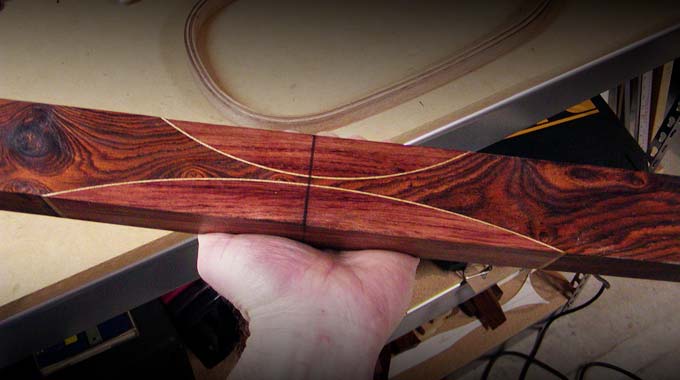
Bill Howland is the owner and bowyer of Brackenbury Custom Bows, Nine Mile Falls, Washington. He has owned and operated the company since August, 2001. The company was started by the late Jim Brackenbury who died in 1991. Bill continues the production of several of Jim Brackenbury’s bow designs. I met Bill at the Pirates of Archery internet forum where we have often shared discussions about making bows. He always has about the best advice that comes from his extensive experience in making custom take-down recurves and longbows. Continue reading
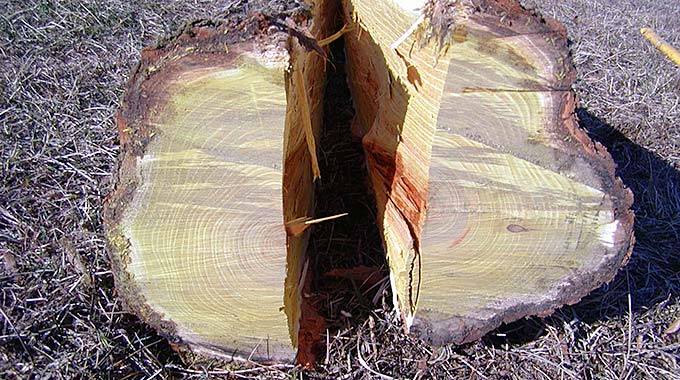
Splitting an osage log into bow staves
A straight Osage Orange log is like a log of gold to a selfbow bowyer. As you probably know, Osage trees don’t usually grow very straight, so finding a clean, straight one is a rare find. My friend Brent brought one over to my house this weekend for us to split into staves. It was about eight-to-10 inches in diameter at the base and almost perfectly straight! He cut it down on his farm in northern Boone County, Missouri, and he wants to make a bow out of it since it grew on his property. That’s pretty neat. If he doesn’t get one made, then hopefully I can make one for him. I hope to make one or two out of it, too.
This will be his first bow build, so I am encouraging him to make one by himself. Osage orange is really nice bow wood. It is rough and tough, and really forgiving wood for a first-time bowyer. Continue reading
How to make a simple bow
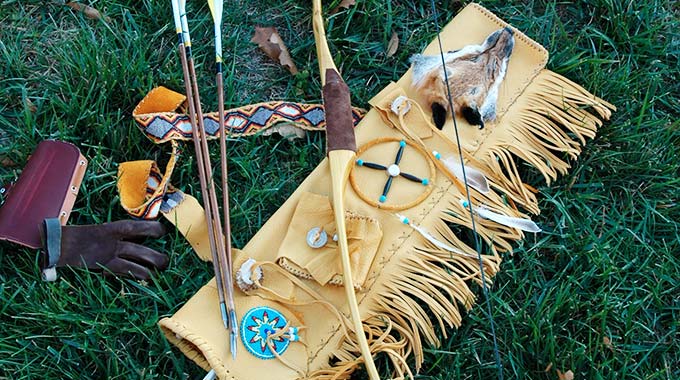
When I was a young boy, my brothers and I used to make a bow out of a hardwood stick and a piece of string. This was always a fun project. Sometimes I like just messing around and decide to make a bow out of a stick harvested from the woods behind my house. You know, not every bow has to be what I call a “glam” bow…a glamorous, fiberglass laminated bow. Primitive bows made from natural materials have a beauty all of their own. Plus, they are cheap and easy to make. If you have always wanted to learn how to make a bow, but don’t have a woodworking shop, or expensive shop tools, you might consider learning how to make wood bows first. Heck, you might get hooked! Wood bows are a pleasure to make and shoot. In fact, one of my primitive bow making friends challenged me at a shoot one time that if I made many wood bows that I might get hooked and never go back to fiberglass. I guess that could be true! Anyway, don’t let a low budget stop you from making bows! Stone age man made bows out of a stick or small tree with a piece of a rock for a scraping tool. I think if he could afford his bow making hobby, then you and I probably can afford to make bows, too. Starting out making wood bows is the best way to start in my opinion. It teaches you how to make wood bend and the basic skills of tillering a bow. Continue reading
How to install buffalo horn overlays on limb tips
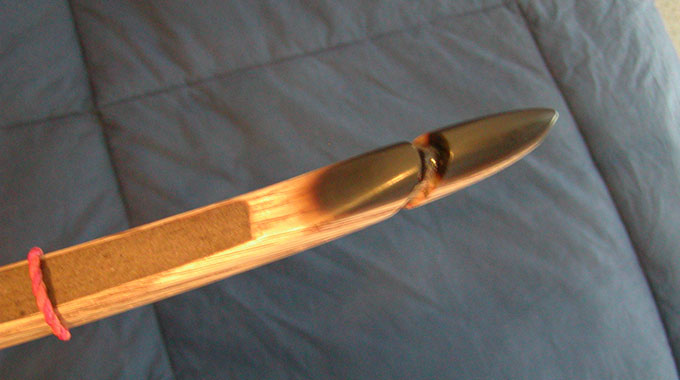
Here’s a build along for adding those sexy buffalo horn overlays to your limb tips. I think they look great and make a good bow look even better. There’s just something about polished horn on a trad bow that makes it look really professional.
Adding layers of horn, antler, or linen phenolic to your limb tips will make your bow limb tips more durable for use with high performance strings, stronger to avoid scratches and denting by rough use while hunting, plus…they just look fantastic. Horn tips are good for both an old bow needing tip repairs or for that new bow you are making. They look good and work great on all types of bows: self bows, wood laminate bows, and fiberglass bows. They are simple to install yourself and this build along will show you how. Click “Buffalo horn limb tip build along” to see the rest of the build along.