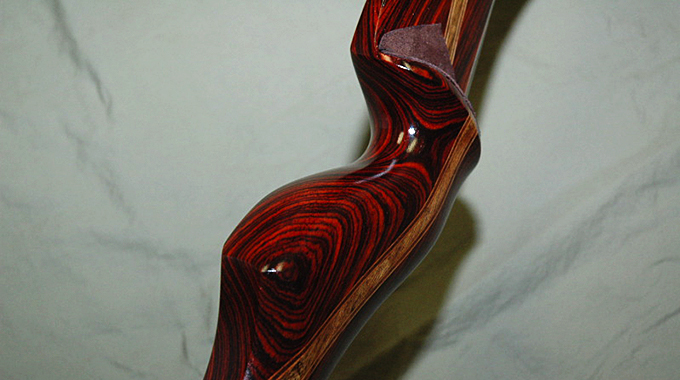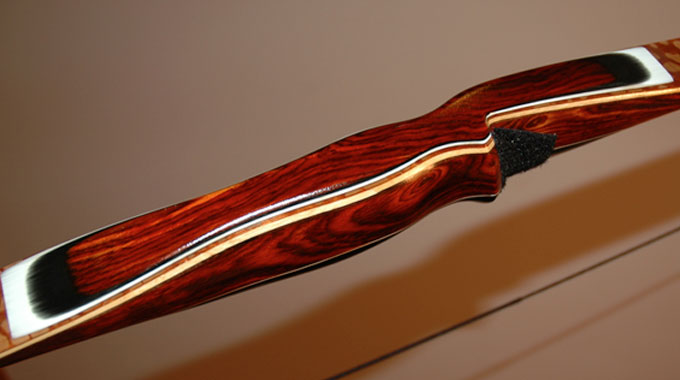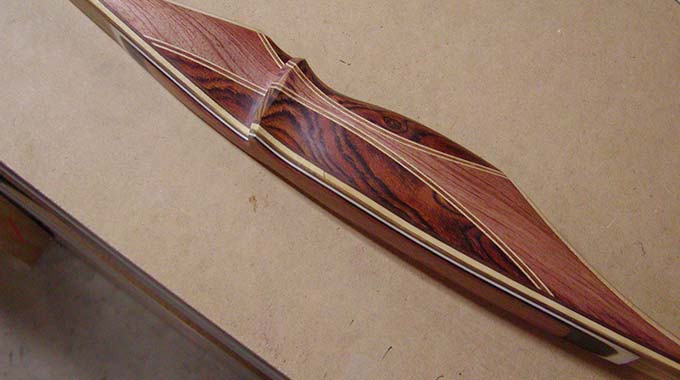
Interview with Bill Howland of Brackenbury Custom Bows

Bill Howland 150x150 Interview with Bill Howland of Brackenbury Custom BowsThis is the first of what I hope will be a series of interviews with custom bowyers. There is so much to learn from these bowyers who work full time doing the craft. I hope you find this information useful in your bow making!

Bill Howland is the owner and bowyer of Brackenbury Custom Bows, Nine Mile Falls, Washington. He has owned and operated the company since August, 2001. The company was started by the late Jim Brackenbury who died in 1991. Bill continues the production of several of Jim Brackenbury’s bow designs. I met Bill at the Pirates of Archery internet forum where we have often shared discussions about making bows. He always has about the best advice that comes from his extensive experience in making custom take-down recurves and longbows. Continue reading

Brent scores big with his Classic Take-down Recurve

Brents buck 150x150 Brent scores big with his Classic Take down RecurveMy friend Brent scored big on this nice 10 point buck this weekend (November 3) with a bow that I made for him. One of his Facebook friends said that “Brent scored on a nice buck with is “old school bow”…lol. As you and I both know, there is nothing old school about a fiberglass recurve, but in this age of high-tech metal compounds I guess that a traditional bow seems like something from the past. There is something really cool about “building your own bow” and killing a deer with it. It is even cooler when it is someone else kills a deer with a bow that you made. Continue reading

Is this the best rasp for making a longbow or a recurve bow?

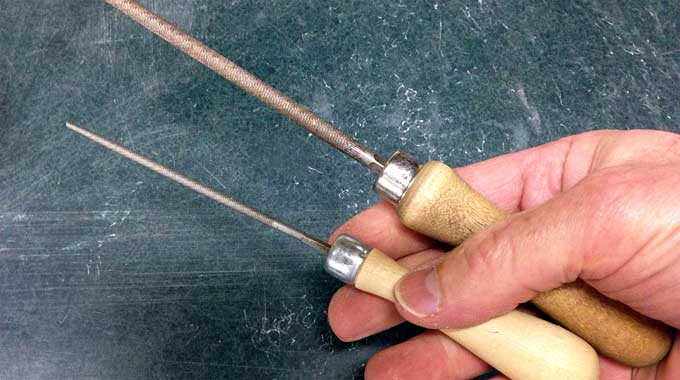
P1010007 150x150 Is this the best rasp for making a longbow or a recurve bow?Probably the best rasp in my tool box for making bows is the “Universal Bowyer’s Rasp,” also called the “UBR10,” designed and sold by Dean Torges. It is really useful for making all types of bows: recurves, longbows, and self bows, but it is especially good for self bows and wood-backed bows where you tiller the bow by rasping and shaving the belly.

I just want to say right away that I am not trying to be a salesman for this rasp. I don’t sell it on this site, nor do I get a commission for selling it, or referring people to buy it. I just like it…a lot…and that’s good enough for me. Continue reading

Cool link in the build your own bow site stats

world wide link pic 150x150 Cool link in the build your own bow site statsI just had to share this photo of a cool link I saw in the site stats for buildyourownbow.com. Only in the internet era is it possible to share around the world like this with like-minded people of different cultures and different languages. One thing for sure is that we all love archery. Please feel free to make a comment below if you agree. Thanks to the folks at www.mitbbs.com for visiting www.buildyourownbow.com and sharing with your friends.–Jim

 Click the thumbnail to see a larger photo with the buildyourownbow.com link!

The truth about bow balance

P1010008 150x150 The truth about bow balanceI think that bow balance is one of the most interesting and important topics about making bows. What can be more important than building a balanced bow? I mean, this seems like possibly the most important thing we can get right. The crazy thing is that for something that seems so important to making a good bow, there doesn’t seem to be much useful information about it in books or magazines. The archery forums have plenty of discussions about tiller and balance, but many comments just seem to be “what so and so taught me to do” or opinions that are not based on experience or fact. I’ve read everything that I can find about bow balance and four popular myths seem to stand out… Continue reading

Applying the designer’s “rule of thirds” to tip design

tip proportion 224x300 Applying the designers rule of thirds to tip designAnyone can glue on some tip overlays and shape them into a suitable bow limb tip, but do they look good? As a graphic designer, I’m always interested in making my bows look good and have good proportions. This applies especially to the limb tips.

The designer’s “rule of thirds” goes something like this…a photo, painting, or design usually looks better when you put the focal point one third of the way from the edge than putting it in the center. The following quote from Wikipedia explains it like this… Continue reading

Splitting an osage log into bow staves

P1010011 300x225 Splitting an osage log into bow staves

Build Your Own Bow author, Jim, poses with the staves.

A straight Osage Orange log is like a log of gold to a selfbow bowyer. As you probably know, Osage trees don’t usually grow very straight, so finding a clean, straight one is a rare find. My friend Brent brought one over to my house this weekend for us to split into staves. It was about eight-to-10 inches in diameter at the base and almost perfectly straight! He cut it down on his farm in northern Boone County, Missouri, and he wants to make a bow out of it since it grew on his property. That’s pretty neat. If he doesn’t get one made, then hopefully I can make one for him. I hope to make one or two out of it, too. icon wink Splitting an osage log into bow staves This will be his first bow build, so I am encouraging him to make one by himself. Osage orange is really nice bow wood. It is rough and tough, and really forgiving wood for a first-time bowyer. Continue reading

Just say “no” to color-coordinated bow accessories

bow accessories 150x150 Just say no to color coordinated bow accessories

Click thumbnail!

I’ve never been one to bash any form of archery. I love all types of bows. But, I just had to share this photo (at right). What has happened to “archery”? I mean, look at all of the stuff on this bow. I have to admit that when I first really got into archery and bow hunting in the 1980′s, I was into compound bows. When I was shooting compounds, I think that I had every type of gadget you could buy attached to my bow. I had a rubber baby buggy bumper string nock so my release aid wouldn’t pinch the arrow nock and break it. My bow had a kisser button, a dovetail sight with fiber optic, T-dot pins, an arrow rest, a cushion plunger, a sling for the grip, an arrow gripper to hold the arrow on the bow when waiting for a monster buck to come, some magic plastic string silencers, Continue reading

How to make a simple thickness sander for bow laminations

P1010029 300x225 How to make a simple thickness sander for bow laminationsWhen I started making bows, I had to order finished bow laminations and overlays from a bow making supplier because I didn’t have a thickness sander. Even though buying prepared laminations was faster and easier, the problem was that I had to order everything I needed one or two weeks before starting the bow. Also, if I didn’t order enough lams or the right ones, or…smack me with an arrow shaft…I broke a lamination, then I wouldn’t have enough lams or overlays to complete the bow and production would come to a screeching stop. Plus, I had to order my lams in standard sizes, which wasn’t always ideal when trying to hit the perfect draw weight on a bow without having to sand the glass or narrow the limbs. Continue reading

How a recurve bow works

What is a recurve?

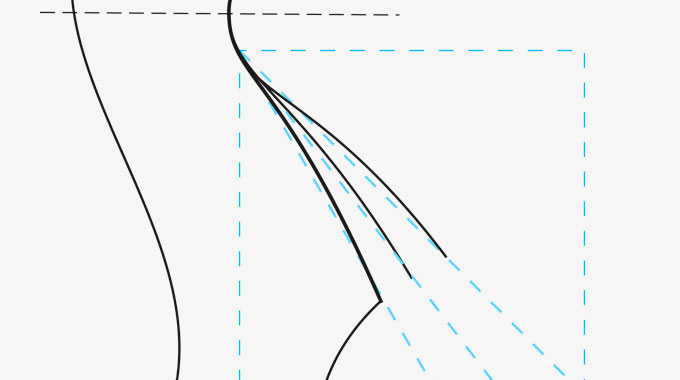
recurve 199x300 How a recurve bow worksA recurve is a curved portion of the tip of the bow limb. Recurves can either be static (rigid) or working (bending). Many sizes and shapes of recurves have been tried throughout archery history, and are still very popular on modern bows. Most modern recurves can be called “contact recurves,” because the string “contacts” the recurved portion of the belly surface of the limb. On some contact recurves, the string will stay in contact with the belly surface of the limb all of the way from brace height until full draw. On other recurve designs, the string will lift off of the belly surface of the limb at some point during the draw. The length of draw where the string lifts off can dramatically affect the force draw curve of the bow. Typically, the later in the draw stroke that the string lifts off, the more energy the bow can store throughout the draw stroke and the smoother the draw stroke will feel.

A recurve creates the effect of a cam as the bow is drawn. Because of it’s tightly curved shape, a bow with recurved limb tips provides even more leverage for the string throughout the draw, which allows a recurve bow to store even more energy than a straight-limbed, reflexed, or even a reflex/deflex bow.

Continue reading


First Name:
Last Name:
Email:


Click the “Like” button below…

Archives

Categories